Once upon a time, a real group called the Secret Society of Happy People decided to dedicate a day to the pursuit of happiness. Members of the society wanted to let happy feelings linger inside them every day. In 2000, the Secret Society of Happy People expanded the celebration to Happiness Happens Month in August.
Happiness is a choice. Remembering happiness does not mean you are problem free. That kind of life doesn’t exist. As the Stoics of Ancient Greece observed, happiness is all about the quality of your thoughts. Happiness is not a destination, but rather a life-long pursuit. Joy can be anywhere at any time. Don’t limit yourself to searching for pleasure. Enjoy everything and anything that makes you happy. Oprah Winfrey said it wasn’t until she learned to be happy that good things started happening to her.
If you struggle with finding happiness, you can learn to be happy. There is plenty of helpful advice available to guide you in the right direction. Reading self-help material is an excellent place to start. Here are a few published works you might want to read to help you in your pursuit of happiness:
Most of the best “how to be happy” books and videos boil down to variations of the Ancient Greek philosophy of stoicism (not to be confused with the modern use of the word). The essence of stoicism is this: no matter what is wrong with the world in general, and your life in particular, you can choose to be happy if you learn how.
“Everything can be taken from a man but one thing: the last of human freedoms – to choose one’s attitude in any set of circumstances, to choose one’s way.” -Viktor Frankl
HISTORY The Secret Society of Happy People started celebrating happiness with “Admit You’re Happy Day,” on August 8, 1999.
HOW TO OBSERVE Notice more happy moments and share them with others. Use #HappinessHappensMonth on social media.
National Couple Appreciation Month in April reminds us to keep the flames of romance alive all year long. Don’t wait for a specific holiday to keep the spark in your relationship hot.
Let’s face it; relationships take work. Whether they are romantic ones or not, they take effort. When two people are in the early stages of love, the excitement and the hormones make us overlook all the flaws and potential obstacles the world throws at us. Fast forward to life. When we value the people in our lives, we take the time to do the little things to let them know.
For the significant other in our life, those little things mean so much more. This person is the one we call when we’re going to be late coming home from work. She’s the person we talk to about big decisions. He’s the person who makes your coffee in the morning.
Whether the relationship is becoming long-term or has already endured the long-haul, National Couple Appreciation Month is a time to re-dedicate the little things we do for each other. Little things go a long way to sending the message that we a loved and cared about.
HOW TO OBSERVE
Spend time with your loved one and reconnect.
Little Things
Leave a love note on your mate’s car.
Surprise your love with coffee or tea before they wake.
If your sweetheart is a selfie-loving type and you’re not, give in on occasion and take a couples’ selfie.
Let your significant other overhear you complimenting them. It’s one thing for you to tell them directly, but to know you tell others what you think means so much more.
Invite your love to go on an activity he or she enjoys. It doesn’t need to be expensive. If they are always pestering you to go for a walk or to the library, they will be pleased by the gesture.
Learn something new together. Explore common interests where you both might have an opportunity to learn while spending time together.
Use #NationalCoupleAppreciationMonth to share on social media.
National Vision Board Day on the second Saturday in January encourages us to set our goals in a visual way. Get out the sticky notes, markers, and inspiration and start plotting your goals for the new year!
Vision board parties began in 2010 between a group of friends as a way for people to get together in a fun environment to set goals, cast a vision and dream out loud in a tangible way. They then mount on their completed vision boards on their walls where they would see them every day. Seeing their hopes and dreams helps set in motion these visions and ideas to become a reality.
Many actors, musicians, fashion and entertainment-based people have been participating in this since its inception. Vision boards help people remember their goals and concepts on a daily basis.
Host a vision party for your friends, family or co-workers. Set goals for the coming year and put them where you can see them. They will help motivate you to attain your goals. Do you have a vision board from last year? How well did it work? Share the results and get ready for an outstanding vision board for this year, too!
Post photos using #VisionBoardDay on social media.
April 10 means today is National Erase Self-Negativity Day on the National Day Calendar. We are spending the day encouraging everyone to take steps toward erasing the influence negative self-talk has on our lives. It’s also a day where we will focus on changing this negative habit into a time of personal empowerment.
Some people think speaking negatively to themselves is a way for them to identify their downfalls or shortcomings and move forward. Even though we may believe negative self-talk is a reasonable and a harmless thing to do, this type of behavior can significantly damage self-esteem over time. We are here to tell you speaking negatively to ourselves is a habit. A bad habit. The good news is we can begin to erase the habit of negative self-talk starting today on National Erase Self-Negativity Day.
Identifying 5Cs of Negative Self-Talk
Each of us has a critical inner voice. This voice can be motivating, or it can do more harm than good. Many of us can easily become trapped in a cycle of negativity, with one critical thought leading to the next. This cycle can stop us from being able to move forward and damage our confidence. These words, if left unchecked, could potentially lead to mental health issues. It is important that we are aware of the five key types of negative self-talk.
Complaining is voicing dissatisfaction about something. Complaining is a form of negative self-talk and over time is a habit that prevents growth and progress. Complaining becomes less negative when we provide a solution or alternative to the complaint.
Criticizing is pointing out what you don’t like whether that’s about yourself, someone else or a situation. Criticism is often a negative habit that starts from within that works its way out into our environment. Rather than criticizing, try framing it as positive feedback to help yourself learn and grow.
Concern can happen when we feel we are losing control, thus creating a spiral of negative thoughts. The best way to show concern is to present ideas that counteract your negative thoughts.
Commiserating is when we gather with our friends and family to share “life” experiences, including things that are upsetting. Sharing grievances can be therapeutic, but it can also be the perfect time for negative self-talk. By simply adding a few positive remarks to any negative conversation, your mind will create a positive outlook and allow for encouraging responses from others, too.
Catastrophizing is negative self-talk that paints a picture of the worst case scenarios in our mind and makes problems seem bigger than they really are. Learning to accept situations for what they are will help you focus on finding a more constructive way to deal with the problem at hand.
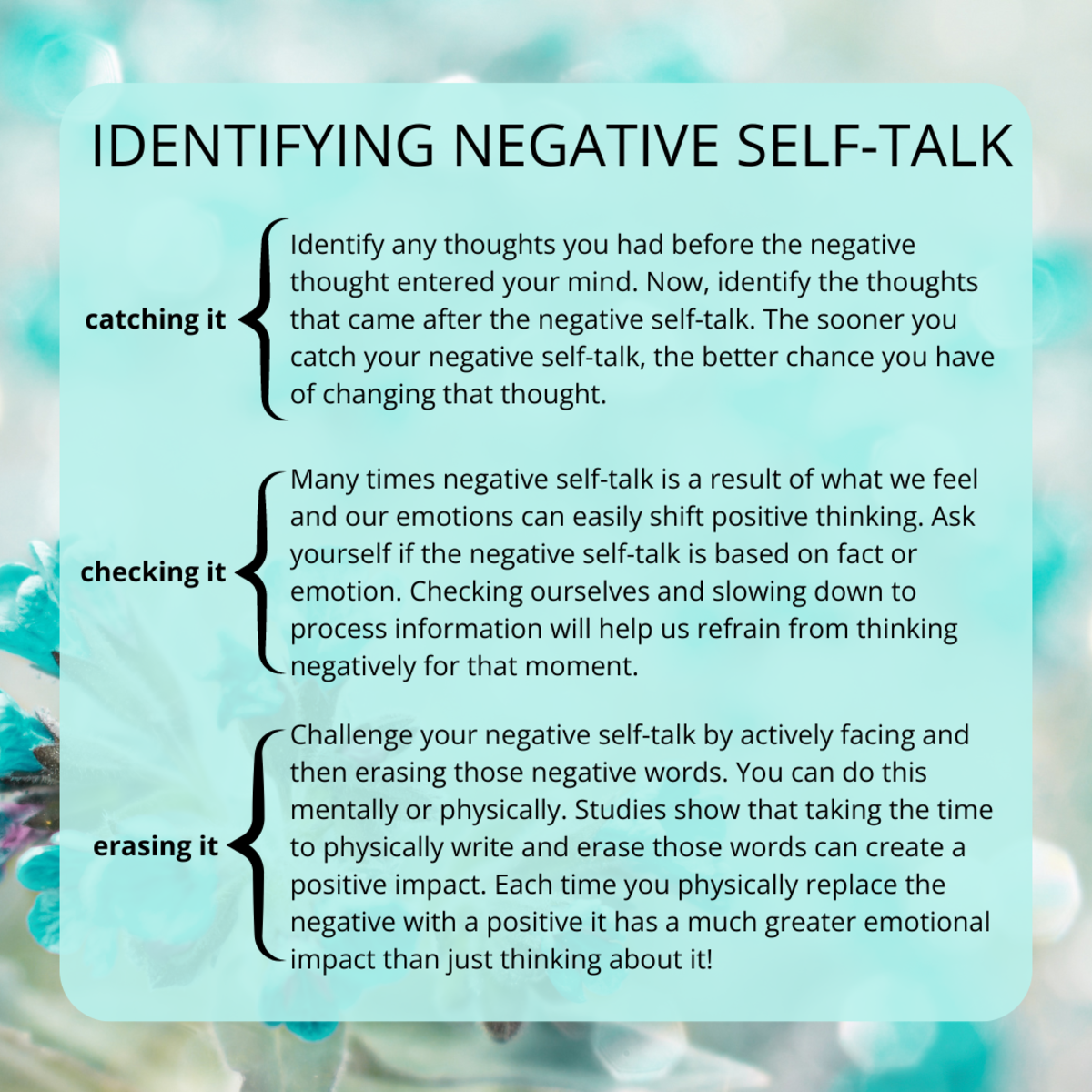
Self-negativity is a habit that can be changed with work and commitment. In fact, the key to erasing self-negativity is through awareness and small habit changes. As negative thoughts arise, lighten them by reframing your mind with a positive mindset by catching, checking, and erasing it.
In 2024, Dr. Elizabeth Scott, PhD., the National Alliance for Mental Illness (NAMI), Pilot Pen, and National Day Calendar began working together to create National Erase Self-Negativity Day on April 10. This new National Day encourages everyone to take big, empowering steps toward erasing the influence negative words have on our lives. Each year on April 10, we focus on changing the negative habit of harmful words and focus more on increasing a positive outlook to live a healthy life year-round. Pilot Pen also invites you to join us as we focus on facing and erasing the damaging words and phrases that encapsulate our negative self-talk.
Founders
Dr. Elizabeth Scott, PhD., the NAMI, the nation’s leading mental health organization, and Pilot Pen are partnering to help individuals take meaningful steps toward decreasing stress and improving emotional well-being through the Erase Self-Negativity Day exercises.
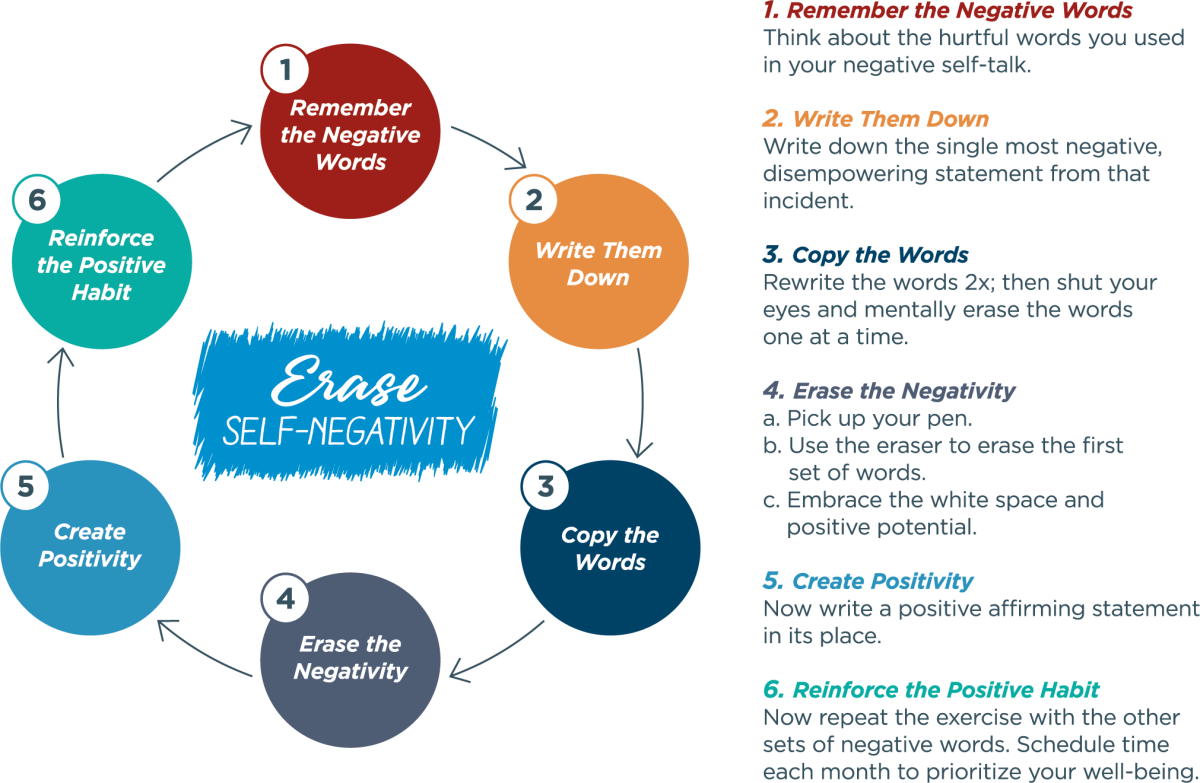
An Exercise to Erase Negativity
To erase self-negativity, we need to start by identifying the primary, negative self-talk words that we play over and over again in our minds. After we recognize what those words are, we can take the necessary steps to actively embrace our personal power to face our negative self-talk and erase this damaging habit.
Find a quiet, restful location, get some paper, a FriXion pen, and follow the guided exercise below.
Join us as we celebrate National Erase Self-Negativity Day across social media using the hashtag #EraseSelfNegativityDay. Share your stories, suggestions, and support to empower and encourage one another to speak to ourselves with compassion. It’s time to begin spreading positivity, starting with yourself.
The Friday before Easter commemorates the Crucifixion of Jesus Christ in the Christian Faith and is called Good Friday.
Christians around the world recall the biblical story of Jesus’s crucifixion on this day. The day goes by other names as well, such as Holy Friday, Black Friday, and Great Friday. Though sources conflict, the phrase “Good Friday” may have been derived from “God’s Friday,” though sources conflict.
The observance is central to the Christian holy season that leads up to Easter when Jesus Christ was resurrected. While Easter has become a traditional celebration in the secular world, Good Friday has remained a holy and spiritual observance.
GOOD FRIDAY HISTORY
The celebration of Good Friday has been observed for centuries, some say since at least the 4th century.
Since Easter is based on the lunar calendar, Good Friday can happen anytime between March 20th and April 23rd depending upon when the first full moon occurs after the spring equinox. Different cultures around the globe celebrate Good Friday with varying traditions.
El Salvador – Artists create alfombra de asserin (sawdust rugs) using colored sawdust. The artwork depicts a variety of scenes or patterns in honor of Good Friday.
London – Reenacts the crucifixion as a passion play. The performance is free to the public.
Ireland – Eggs are marked with a holy cross and are then eaten on Easter Sunday.
Israel – Christians walk in Jesus’s footsteps in Jerusalem where he was crucified.
HOW TO OBSERVE GOOD FRIDAY
Churches across the country hold services.
Depending on the denomination, their services and traditions may vary.
Many spend the day in meditative reflection.
Some churches will fast, selected hymns are chosen for services and a black cloth is draped over the altar and cross.
Other churches will include specific prayers such as the Stations of the Cross.
Similar to making Easter bread, some make hot cross buns for the observance. Learn more about the biblical story of the crucifixion.







![DSS Games The Couples Game That's Actually Fun [A Party Game to Play with Your Partner]#NationalCoupleAppreciationMonth](https://jensperspectiveblog.com/wp-content/uploads/2024/03/51ceepkaxul3508106032252790763.jpg?w=116)