NATIONAL PIANO MONTH

All during September, we take time to honor everything piano. It’s National Piano Month! The entire month pays tribute to pianists everywhere, piano makers, and those who enjoy piano music.

Bartolomeo Cristofori is given credit for inventing the first piano in Padua, Italy, around 1700. At the time, Cristofori’s employment with the Florentine Court of the Grand Prince Ferdinando de Medici put him in charge of a large collection of the Prince’s musical instruments, including his harpsichords. During this time, Cristofori’s interest in stringed instruments led him to the early development of the piano. Cristofori’s early piano designs were a testament to technological innovations in keyboard instruments of the times. At the height of the Industrial Revolution, composers and pianists like Mozart found a passion and eagerness for a more powerful and sustainable piano sound. As expected, the piano underwent tremendous changes during the 1790s to the 1860s, leading to the modern form of the piano.

Piano Types

Piano experts and enthusiasts identify four basic types of pianos–the Spinet, Console, Studio, and Grande. The Spinet piano is the smallest of all piano types, while the Grande is the largest. Though all pianos are upright pianos, piano experts agree each piano style has its own distinct and identifiable sound.

The Spinet piano is the smallest of all pianos. Spinet pianos have a large number of working parts and are characterized as being dropped action pianos. Dropped action refers to the hammer-like striking action to strike the keys. Similar to its relative, the Console piano is closest to the Spinet piano in size. Furthermore, pianists use the same to play the Spinet piano as they do for the Console piano.

Studio pianos are taller than both the Spinet and Console pianos, respectively. The Studio piano also offers a richer tone than the two. However, the Studio piano has a different feel in comparison to a Spinet or Console piano. Finally, Grande pianos are the tallest and largest of all pianos. Like Studio pianos, Grande pianos are full of rich sounds carried carefully within the keys to emit a beautiful sound. In addition, Grande pianos are known to be the most beautiful and durable of all four pianos. Notably, when properly cared for, Grande pianos will last generations, making them a timeless heirloom.

Other types of pianos found today are more specialized and fall into their own category. Furthermore, pianists commonly use these types of pianos in contemporary music. Electric pianos are electro-mechanical designs, and the synthesized piano-like tones use oscillators and digital samples of acoustic piano sounds.

My husband is a professional musician. While we cannot fit a piano in our living room, his Yamaha is not the kind of keyboard you find in a big box or even lots of music stores. He still performs in local venues. While it looks like a piano and indeed sounds like it, he tickles, jazz, soul, big band, and easy listening out of it with years of knowledge and practice. Make sure you check out the samples on his website.

NATIONAL PIANO MONTH HISTORY

We give credit to Bartolomeo Cristofori as the inventor of the first piano in Padua, Italy, around 1700. If it wasn’t for his interest in stringed instruments, Cristofori might not have developed the piano we know today. Because of him, the piano has undergone tremendous changes leading to the modern form of the piano.

Explore More…

HOW TO OBSERVE #NationalPianoMonth

National Piano Month offers ample opportunity to play, listen and learn about the piano. Attend a concert. Listen to a variety of genres with piano as the primary instrument. Develop your piano-playing skills or teach someone else to play. Sign up for lessons. Share your favorite piano music with others.

Use #NationalPianoMonth to share the month on social media.

NATIONAL MORTGAGE PROFESSIONAL MONTH

NATIONAL MORTGAGE PROFESSIONAL MONTH

Every September, National Mortgage Professional Month recognizes the professionals who play a role in helping people finance the dream of homeownership. 

Since 2011, home sales in the United States have steadily grown, meaning each year more and more people are buying a home. Whether it’s a first home or the next home, mortgage professions understand how exciting and stressful the process can be. A mortgage professional takes on the task of making sure everything is in place by closing day. They may be loan officers, processors, underwriters, servicers, insurers, or other mortgage professionals, but all of them work hard to make your home loan a reality. 

Their varied roles may include:

  • Reviewing loan applications
  • Verifying credit
  • Processing loan applications
  • Appraising the property
  • Examining the title
  • Verifying the purchase price, annual percentage rate, and term of the loan
  • Preparing the loan

Most people are not aware of the number of people and amount of work involved between the moment someone decides to buy a home and the day the final contracts are signed. 

NATIONAL MORTGAGE PROFESSIONAL MONTH HISTORY

In 2015, United Guaranty founded National Mortgage Professional Month to honor all mortgage professionals.

HOW TO OBSERVE #MortgageProfessionalMonth

During September, give a mortgage professional you know a shout-out. Recommend them to someone who is looking for a new home. Let them know you appreciate all they do to help people achieve homeownership. If you’re considering purchasing a home, learn about the process and what to expect. 

Use #MortgageProfessionalMonth to share on social media. 

NATIONAL SECONDHAND WARDROBE DAY

National Secondhand Wardrobe Day encourages deals and savings each year across the United States on August 25. Find steals in secondhand and consignment stores all day long on gently worn clothing for all ages. 

Did you know, secondhand shopping offers numerous benefits. Beginning with the savings, for a fraction of the price of retail, thrifty shoppers fill their wardrobe while pocketing the savings.  Additionally, they conveniently shop for the whole family in one or two stores.  Many secondhand stops cater to particular age groups making it easier to find the styles shoppers seek. Instead of ending up in a landfill, the lightly used clothing gets another go around. And, this National Day benefits the Earth as well!

Freeing up some of your closet space and giving some of your rarely worn clothes will benefit you with extra space.  Donating your clothing will be helping someone else who is a secondhand store shopper.  Your donation will be a blessing to them as well as to the charity that runs the store.

Why allow the stigma of wearing used clothing beat the above scenario of the recycling, reusing, re-purposing cycle we are trying to teach the next generation. Plus, many local secondhand stores are set up as a nonproft raising additional funds for local needs in the community. 

In Northwest Florida, Waterfront Mission is the place to go.  With stores from Crestview to Mobile, you’ll not only find a great deal but help those who need it most as well.  Check out thier online store too.  Helping Hand is another here.. With so much moving to online shopping check out Tredup.  A online experience that’s helping encourage online shopping in this category. Others include Goodwill, Thrifted, The RealReal, Swap, Worn Not Wasted, Alyssa’s, and more…

HOW TO OBSERVE #SecondhandWardrobeDay

For all secondhand store shoppers, find an entire wardrobe in thrift stores across the United States. Do you need more ways to celebrate? Well here you go:

  • Watch thrift store makeover shows inspiration.
  • Share your tips and trick to thrift store shopping.
  • Learn how to best utilize a bargain for maximum appeal.
  • Invite others to join you and then host a thrift store fashion show. 

Put your new outfit on and use #SecondhandWardrobeDay to post images on social media. 

NATIONAL WAFFLE DAY

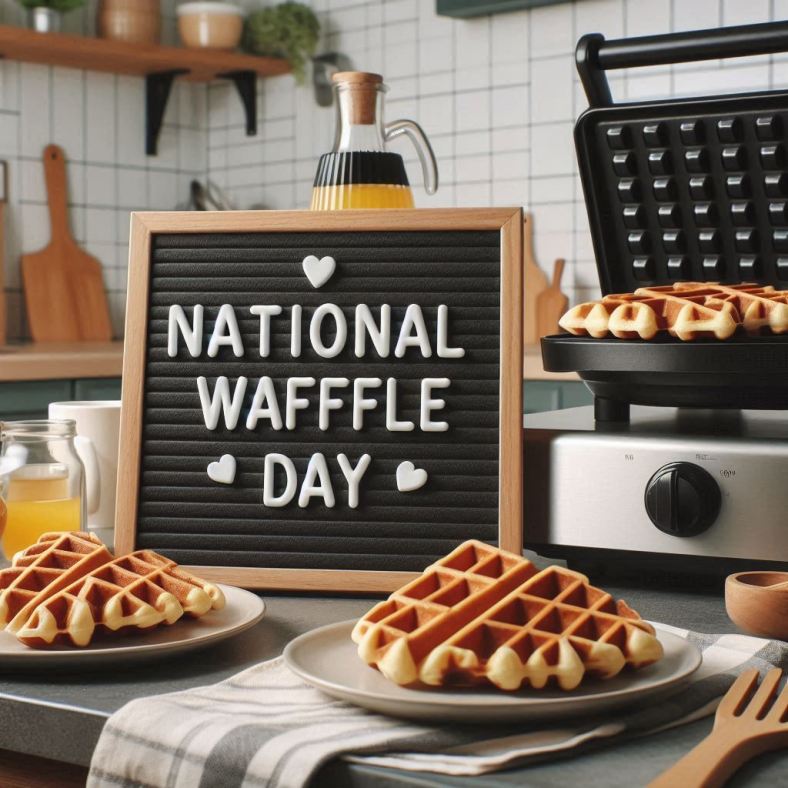
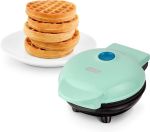
National Waffle Day on August 24th commemorates the anniversary of the first waffle iron patent issued. Celebrate by savoring your favorite kind of waffle!

On August 24, 1869, Cornelius Swarthout of Troy, New York received his patent for the waffle iron. While waffles existed long before then, the invention made waffles more readily available.  

Eaten throughout the world, a waffle is a leavened batter or dough. When cooked between two patterned plates, the dough bakes in the waffle’s characteristic uniform impressed surface. Waffles also come in many forms. Depending on the type of batter or iron used, the resulting waffle varies by consistency, size, shape, and flavor.  

Waffle irons and waffles originated around the 14th century.  An anonymous husband penned the first known waffle recipe as a set of instructions for his wife.  According to the manuscript, Le Ménagier de Paris, each of the four recipes began: 

Beat some eggs in a bowl, season with salt and add wine. Toss in some flour, and mix. Then fill, little by little, two irons at a time with as much of the paste as a slice of cheese is large. Then close the iron and cook both sides. If the dough does not detach easily from the iron, coat it first with a piece of cloth that has been soaked in oil or grease. 

  •  1911 – First electric waffle iron introduced by General Electric.
  • 1953 – Frank Dorsa’s Eggo Frozen Waffles are sold in Supermarkets for the first time.
  • 1964 – Belgian Waffles debut at New York’s World’s Fair.

Explore More…

HOW TO OBSERVE #NationalWaffleDay

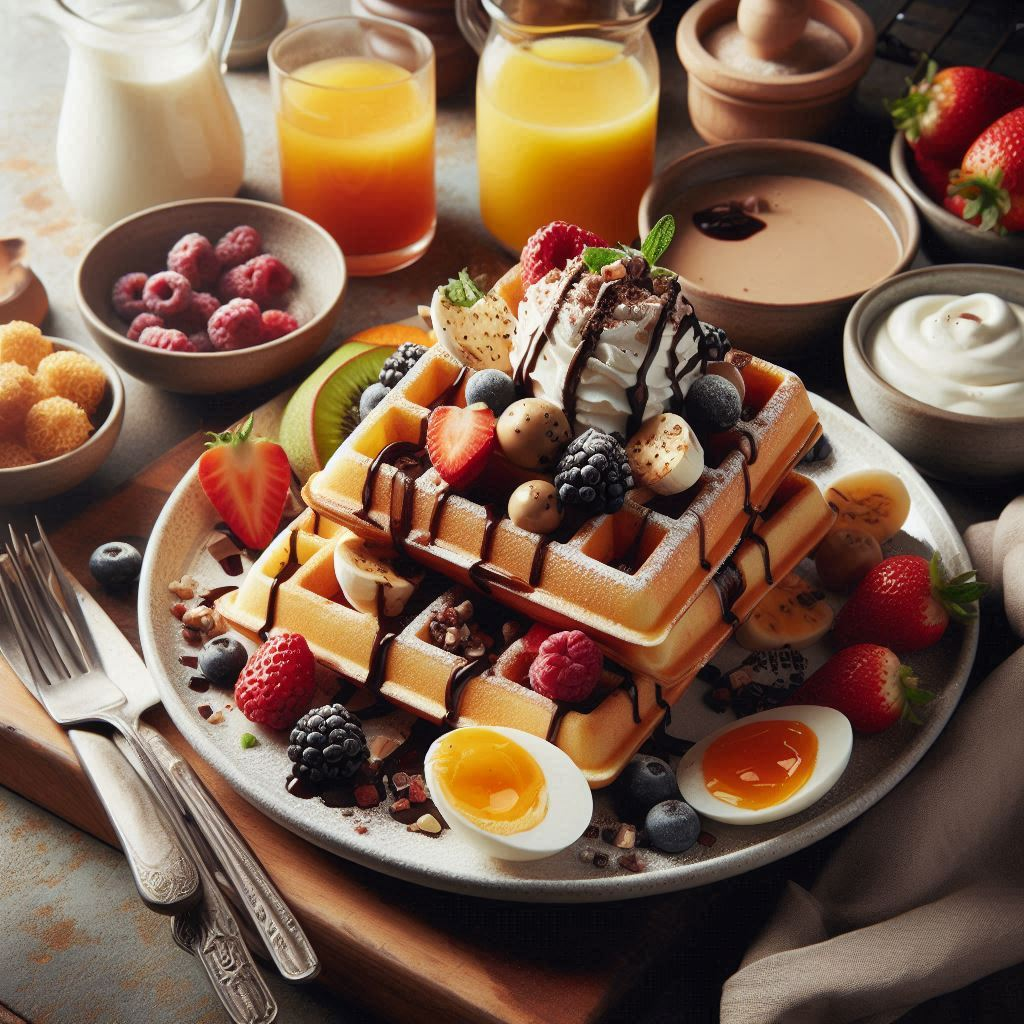
Enjoy your favorite waffle recipes. Or visit a local restaurant for some fresh served waffles. Restaurants across the country specialize in waffles, crafting delicious combinations for every meal of the day. No matter your preference, there’s a waffle for you!

Invite friends over for a waffle making party. Set up a buffet with fresh fruit, syrups, and nuts. Ask them to bring their best ingredients and get tasting! You never know what you’ll discover. Make it breakfast, brunch, snack or dessert, waffles are very versitile.

True Belgian WafflesClassic Buttermilk WafflesApple Cinnamon WafflesBanana Oatmeal Buttermilk WafflesBest Chocolate Chip Waffles

Use #NationalWaffleDay to post on social media.