NATIONAL STATES AND CAPITALS DAY

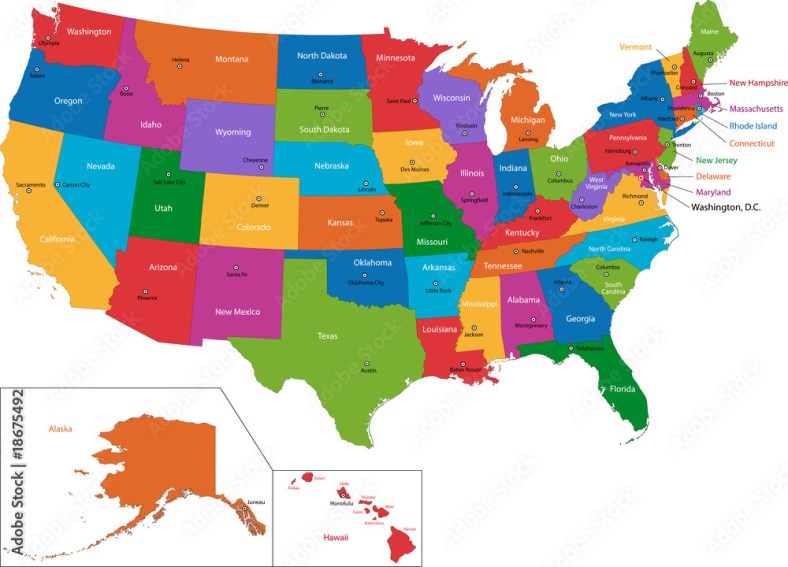
September 22 focuses on raising awareness and sharing education about all 50 states and their capitals on National States and Capitals Day.

As children, we learn about the 50 states and their capitals in the U.S. But as we get older, we tend to forget those important cities and their role in crafting policy and influencing the economy. And, while everybody knows their own state capital, many do not even remember the capital of the state next door. Today, let’s take the time to remind ourselves how important every state and capital is to our nation.

Learning about States and Capitals

Remember those paper maps we were given to learn about states and capitals? Our worksheet had blank states with star indicating where the capital was supposed to be. The agony of naming each state and capital was definitely stressful! We spent time memorizing names, where the state was and naming each capital. Not to mention spelling everything correctly. Some of us were lucky to have a teacher that would play a game to help us remember.

Typically, we learn about states and capitals between the grades 3-6, starting with the state we live in. From there, we learn our country has 50 states and 50 capitals within each state. All 50 capitals have a unique history, which means there are 50 reasons why a specific city or town was chosen to be a state capital. In addition, we eventually learn how governments operate and the vital roll each state plays in our national government.

Looking for an adventure?  Take a road trip for your next vacation.  Chances are you’ll find a lot more than 50 reasons to enjoy the scenery.  Whether visiting family and friends or another specific spot, do some road tripping to some scenic vistas and appreciate the history, flavor and cultures along the way.

Explore More…

Are state capitals found in the largest cities of each states? No. The first state capitals were built according the where the majority of the population lived in a state, or near a main access hub. For example,  in North Dakota the state capital is Bismarck, but was once the capital of the Dakota Territory. The Northern Pacific Railroad was built to transfer goods from eastern U.S. to the west, making Bismarck the prime location for state government. Bismarck became the official state capital only after the territory was split into 2 states–North and South Dakota.

Huh?

  • The letter Q is the only letter NOT found in any of the state names
  • Sweet Home, Alabama is a real place.
  • It’s illegal to bury people in San Francisco, California.
  • New Jersey has a volcano.
  • South Carolina has a place called Monkey Island, that has over 4,000 rhesus monkeys.
  • The state bird for Wisconsin is a plastic flamingo.
  • There are more chickens in Delaware than there are people.
  • The Empire State Building in New York has it’s own zip code.

State Capitals in Small Cities

  • Juneau, Alaska, population est. 32,300.
  • Dover, Delaware, population est. 39,400.
  • Frankfort, Kentucky, population est. 28,600.
  • Augusta, Maine, population est. 18,900.
  • Annapolis, Maryland, population est. 40,800.
  • Jefferson City, Missouri, population est. 43,230.
  • Helena, Montana, population est. 32,100.
  • Concord, New Hampshire, population est. 4,000.
  • Pierre, South Dakota, population est. 14,100.
  • Montpelier, Vermont, population est. 8,100.

BEHIND NATIONAL STATES AND CAPITALS DAY

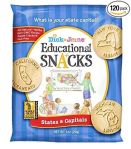
Dick & Jane Educational Snacks receives credit for the idea to celebrate National States and Capitals Day on September 22. Not only does it raise awareness about the importance of knowing all 50 states and capitals, it reminds people to have fun while learning.

LEARN YOUR STATES AND CAPITALS

  • Divide learning about states into regions to learn each region before moving on to the next.
  • Check out a book from the library each week on a specific state to learn facts. Return the book and pick another state until all states have been covered.
  • Learn fun facts about states. What famous people are from there? What kind of tourist attractions might be fun to visit?
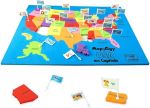
  • Fix a puzzle with all 50 states and capitals.
  • Draw a map of the United States with the states and fill in the capitals, too.
  • Use Dick & Jane Educational Snacks to help your kids learn about states and capitals.
  • Tag your videos learning states and capitals on social media #NationalStatesandCapitalsDay.
INTERNATIONAL BACON DAY

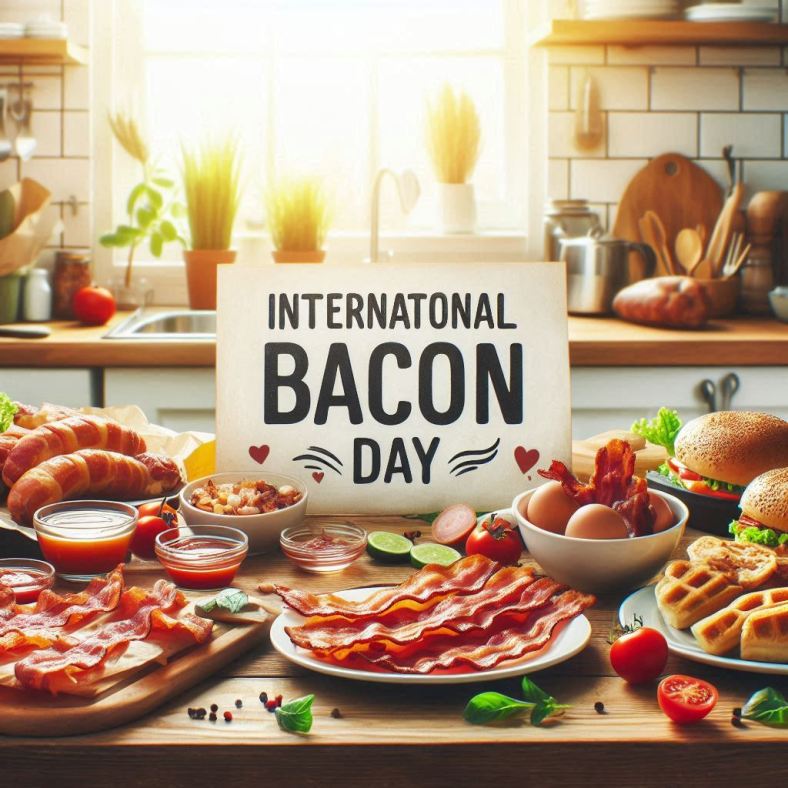
The first Saturday in September is International Bacon Day and a day to enjoy all things bacon! This delicious food holiday is a favorite because bacon makes everything better!

There are so many things we can say about bacon and the flavor it adds to dishes. Today, we are reminding everyone that bacon is not just a breakfast food, but also a great way to add delicious flavor to any recipe.

Bacon Backstory

Bacon is pork cured in salt made from cuts of the belly or back of a pig. Curing pork dates back thousands of years. During ancient times, Chinese, Egyptian, and Roman cultures all had methods for preserving pork. However, Romans recieve credit for sharing their knowledge of curing pork calling their bacon “petaso.” As cured pork expanded throughout Europe, the meat became a staple to families because of the ability to preserve it easily.

European settlers brought their pork curing techniques to America the same time the first settlers arrived. However, the meat was much saltier and leaner than what they would eat in Europe. During the 19th and 20th centuries, meat production began to expand to the general public. Brining and smoking bacon became widely acceptable in mass production, making the distribution of bacon much easier. Today, bacon plays a significant roll in American cuisine.

5 Bacon Festivals in the U.S.

  1. Bacon Fest, Pennsylvania
  2. Bourbon and Brews Festival, Kansas
  3. Bacon & Beer Festival, New Hampshire
  4. Bacon Bash, Texas
  5. Memphis Flyer Bacon & Bourbon, Tennessee

Did You Know?

Bacon is one of the most popular and recognizable meat products around the world and is known for its distinctive savory and smoky flavor.

Are there different types of bacon? Yes! Here the 4 common types of bacon throughout the world:

  1. American bacon is the most well-known bacon type. It’s made from pork belly and contains both meat and fat. This type of bacon becomes crispy after cooking.
  2. Canadian bacon is made from the lean parts of the pig. Normally, Canadian bacon is similar to ham in flavor and appearance.
  3. Pancetta is an Italian bacon made with salt and spices that can be eaten cooked or uncooked. People often use pancetta in sandwiches, but also in some dishes.
  4. Guanciale is another Italian bacon commonly used in carbonara and amatriciana. This type of bacon is the fattiest of all other bacon types and is probably most flavorful.

Bacon adds rich flavor and versatility to cooking by enhancing the dishes it is added to. Whether enjoyed on its own, as a savory ingredient, or as a guilty pleasure, bacon remains a favorite food around the globe.

HISTORY BEHIND INTERNATIONAL BACON DAY

Each year on the first Saturday in September we celebrate International Bacon Day as a way to indulge and enjoy bacon. We plan on starting our day with bacon and eggs, have a bacon sandwich for a mid morning snack, and eat a BLT for lunch. Then, we will likely eat a bacon-inspired pasta for dinner with a bacon infused dessert. Later in the evening, we are going to relax with a nice Bloody Mary with bacon garnish.

Explore More…

Salami Day

Bologna Day

Corned Beef Hash Day

Cold Cuts Day

International Bacon Day

Wiener Schnitzel Day

Sloppy Joe Day

National Sausage Month

National Meatball Day

Bacon Day

Pigs in a Blanket Day

6 INTERNATIONAL BACON DAY CELEBRATION IDEAS

International Bacon Day is a time to savor the delight of delicious bacon! Embrace your joy for bacon today by having fun with today’s food holiday.

  1. Host a bacon-everything breakfast by adding bacon to your eggs, pancakes, or omelets. You can also make breakfast burritos or add bacon to your waffle batter.
  2. Experiment with bacon in a new recipe or add it to a favorite one you already make.
  3. Cook different types of bacon and have a bacon tasting party with your family and friends. We recommend adding Applewood -smoked, maple-glazed, or peppered flavor to your menu.
  4. Create the ultimate beverages by adding bacon and other ingredients. In fact, we hear adding bacon as a garnish to a Bloody Mary is delicious!
  5. Find a local bakery or specialty bacon shop that offers a variety of bacon flavors. This might be a great way to treat yourself to a better quality bacon versus buying bacon in the grocery store.
  6. Share your love for bacon on social media using the tag #InternationalBaconDay.

HISPANIC HERITAGE MONTH

Beginning on September 15, and continuing through to October 15, we recognize National Hispanic Heritage Month. During the four weeks, celebrations honor the heritage and contributions made by members of the Hispanic community. President Lyndon Johnson first declared Hispanic Heritage Week in September of 1968. Years later, in 1988, U.S. Rep. Esteban Torres (D-California) introduced legislation to expand Hispanic Heritage Week into a full month. Festivities begin on September 15, marking the anniversary of independence for the Latin American countries Costa Rica, El Salvador, Guatemala, Honduras, and Nicaragua. With great fanfare, celebrations sweep across Latin America, Central American, and on into Mexico and Chili commemorating each country’s independence from week to week!

CONTRIBUTIONS

As of 2016, the Hispanic population has grown to nearly 57 million people in the United States. Amazingly, Hispanic people contribute to two-thirds of the residents, with that number increasing every day. Furthermore, an estimated 27 million Hispanics were eligible to vote that same year, proving people of Hispanic heritage are a thriving part of society. As the Hispanic population continues to grow in strides, more opportunity presents itself to embrace the rich culture and vast history they provide. From coast to coast, we celebrate Hispanic heritage every day in mainstream society. It’s not only reflecting our cultural differences; it’s adding a different perspective to our lives for us to enjoy.

Hispanic people across the country contribute to society in unprecedented ways. Historically, Alberto Gonzales is credited as being the first Hispanic U.S. Attorney General, while Mel Martinez is considered the first Cuban-American U.S. Senator. Currently, and politically, Ted Cruz and Marco Rubio, both members of the Hispanic community, are members of the U.S. Senate. Sonia Sotomayor is the first Hispanic to sit as a U.S. Supreme Court Justice. Undeniably, representation from the Hispanic community is found in schools, public office, medical, fashion, as well as every aspect of business.

In addition, pop culture contributions by the Hispanic community flourishes thanks to many talented artists, such as Salma Hayek, George Lopez, Carlos Santana, and Jennifer Lopez. Finally, we need to give credit to the countless tasty Hispanic recipes found across the nation. Hispanic food has increasingly become a part of mainstream Americana. We relish the flavor and spice deeply infused into the traditions. Dishes ranging from tacos and tamales to Cuban sandwiches, nachos, Tres leche cake, family taco night, tequila, and Mojitos, entice us to enjoy the Hispanic heritage, one bite at a time.

HISPANIC HERITAGE MONTH HISTORY

Originally, President Lyndon Johnson declared Hispanic Heritage Week in 1968. Through later legislation, submitted by U.S. Rep. Esteban Torres (D-California), the week was expanded to National Hispanic Heritage Month under the direction of President Ronald Reagan in 1988.

More to Explore…

HOW TO OBSERVE #HispanicHeritageMonth

Joining local celebrations during National Hispanic Heritage Month is a fantastic way to meet new people. Additionally, you can learn more about the contributions Hispanics have made in areas of politics, business, the arts, sports, fashion, and cuisine, to name a few. Embracing the history and traditions of another culture not only broadens your knowledge, but it also teaches appreciation of other people and their customs.

Use #HispanicHeritageMonth in social media correspondence.

NATIONAL MORTGAGE PROFESSIONAL MONTH

NATIONAL MORTGAGE PROFESSIONAL MONTH

Every September, National Mortgage Professional Month recognizes the professionals who play a role in helping people finance the dream of homeownership. 

Since 2011, home sales in the United States have steadily grown, meaning each year more and more people are buying a home. Whether it’s a first home or the next home, mortgage professions understand how exciting and stressful the process can be. A mortgage professional takes on the task of making sure everything is in place by closing day. They may be loan officers, processors, underwriters, servicers, insurers, or other mortgage professionals, but all of them work hard to make your home loan a reality. 

Their varied roles may include:

  • Reviewing loan applications
  • Verifying credit
  • Processing loan applications
  • Appraising the property
  • Examining the title
  • Verifying the purchase price, annual percentage rate, and term of the loan
  • Preparing the loan

Most people are not aware of the number of people and amount of work involved between the moment someone decides to buy a home and the day the final contracts are signed. 

NATIONAL MORTGAGE PROFESSIONAL MONTH HISTORY

In 2015, United Guaranty founded National Mortgage Professional Month to honor all mortgage professionals.

HOW TO OBSERVE #MortgageProfessionalMonth

During September, give a mortgage professional you know a shout-out. Recommend them to someone who is looking for a new home. Let them know you appreciate all they do to help people achieve homeownership. If you’re considering purchasing a home, learn about the process and what to expect. 

Use #MortgageProfessionalMonth to share on social media.