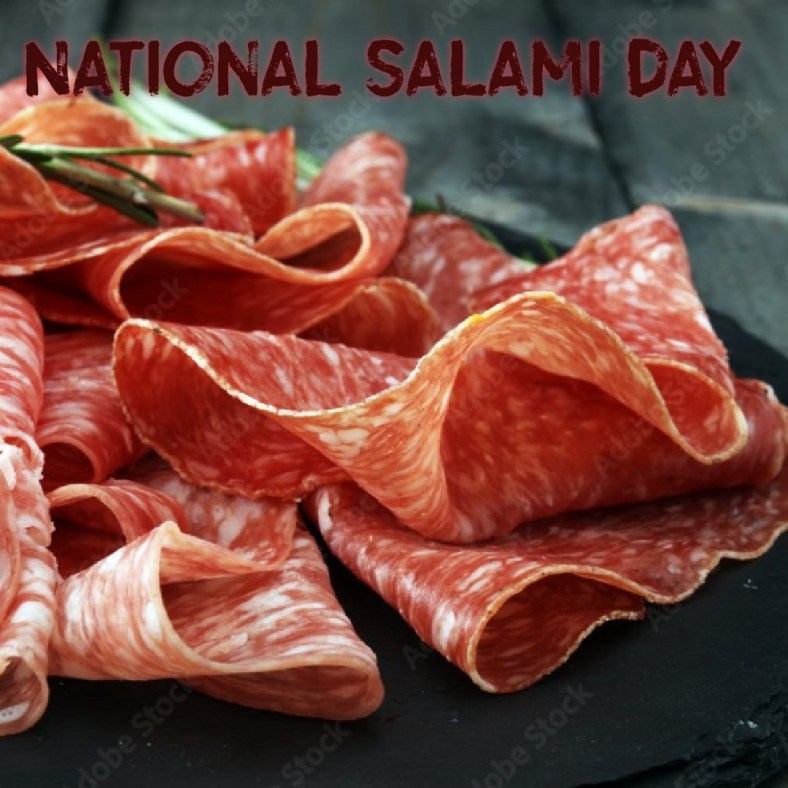
NATIONAL SALAMI DAY

National Salami Dayu on September 7th recognizes a cured meat many people enjoy every day. Salami are cured, fermented, and air-dried sausages that find their way to our delis and butcher shops in delicious variety.

Most commonly made with pork, makers use other meats and blends when preparing salami. For example, delis may offer a lamb, duck, or a beef and pork blend. The ground sausage is blended with seasonings and salt air-cured in either a pork or beef casing. Methods and recipes vary by region and country. Even aging time varies. However, makers typically age salami between 30 to 90 days or longer.

While salami’s beginnings are uncertain, the Romans may have introduced methods used today. In days before refrigeration, Salamis were historically popular among Southern European peasants. The sausage keeps well once cut when stored at room temperatures for up to 30 to 40 days.

Two salamis that might be familiar to you are Genoa and Hard Salami. Genoa salami ages with red wine, peppercorns, and garlic. This softer salami offers a fermented flavor. In contrast, Hard Salami not only falls into the cured category but makers also dry and smoke the meat. The resulting salami slices easily.  

NATIONAL SALAMI DAY HISTORY

The Salami Appreciation Society in Henrico, Virginia created National Salami Day in 2006.

HOW TO OBSERVE #NationalSalamiDay

Enjoy salami in a variety of ways. Don’t just stop at a sandwich. The flavor pairs well with a variety of cheeses and pasta sauces. In a cold pasta dish, salami becomes the star. Don’t forget, Italy gave us this Italian original, even if it’s made worldwide.

Dice up salami and add it to a salad. Whatever bounty harvested from your garden will benefit from the flavor of salami. Just don’t add any additional salt. Most of the seasoning will come from the salomi.

Get yourself a few slices of salami and use #NationalSalamiDay to post on social media.
NATIONAL PRIME RIB DAY

National Prime Rib Day annually recognizes this special meal favorite on April 27th each year. Sometimes known as the “King of Meats,” Prime Rib is a choice cut from one of the eight prime cuts of beef.

A rubbed-on seasoned and then slow-roasted prime rib will give you a deliciously tender, tasty main course. Find many recipes and helpful “how to cook prime rib” guides on the internet for all to use. Some of the most common seasons used include garlic, salt, pepper, rosemary, onion, oregano, and thyme.

Depending on your preference, you might choose to serve your prime rib with fresh vegetables such as asparagus, broccoli, cauliflower, or Brussel sprouts. A variety of potatoes complement prime rib, too. Whether you like mashed, baked, or roasted potatoes, they will pair well with this hearty meal. Add a light salad or pasta dish, too. Don’t forget to serve your favorite wine or beer. Your guests will appreciate it. 

Finish off the meal with a fruit-topped dessert. It’s definitely a meal worthy of a celebration!

More to Explore…

HOW TO OBSERVE #NationalPrimeRibDay

Enjoy a Prime Rib at your favorite restaurant or enjoy making one at home.  Share your photos on social media using #NationalPrimeRibDay.

National Burrito Day

National Burrito Day on the first Thursday in April celebrates the tasty and versatile Mexican dish wrapped in a tortilla. 

A burrito is a heavy tortilla wrapped around meat, cheese, tomato, rice, beans, vegetables, and sauces. Like many other tortilla dishes, the burrito is flexible. The cook chooses the meat fillings from ground beef, shredded chicken, shredded beef or shredded pork. The same applies to the bean choices, often ranging from black, red, whole or refried beans. Once again, the flexibility of choice applies to the vegetables allowing the cook to grill the vegetables or keep them fresh. Spices such as cumin, chili powder, and oregano give the burritos an authentic Mexican flavor. For added crunch, chimichangas are burritos that have been deep-fried.

The word burrito first appeared in the Dictionary of Mexicanisms in 1895. The Guanajuato region of Mexico uses the term and means little donkey in Spanish. It is possible that it stems from the appearance of the packs and bedrolls donkeys used to carry. In other regions of Mexico, similar types of food are known as flauta.

The burrito was introduced in the United States in the 1930s at the El Cholo Spanish Café in Los Angeles.  Since then, the burrito has found its way to menus all across the United States. Home cooks serve the burrito because it’s a crowd-pleaser and filling, too. 

HOW TO OBSERVE #NationalBurritoDay

Call some friends and go out for burritos or make some at home. Who makes your favorite burritos? Be sure to tag someone who prepares the best burritos whether it’s mom or the local Mexican restaurant. If you make the best, you might be getting some love today. 

Use #NationalBurritoDay to post on social media.

Don’t forget any of these related celebrations…

amzn_assoc_placement = “adunit0”;
amzn_assoc_search_bar = “true”;
amzn_assoc_tracking_id = “jensperspec0d-20”;
amzn_assoc_search_bar_position = “bottom”;
amzn_assoc_ad_mode = “search”;
amzn_assoc_ad_type = “smart”;
amzn_assoc_marketplace = “amazon”;
amzn_assoc_region = “US”;
amzn_assoc_title = “Shop Related Products”;
amzn_assoc_default_search_phrase = “Burrito recipes “;
amzn_assoc_default_category = “All”;
amzn_assoc_linkid = “0dabd934cae9c587a9b2073b82dbe35c”;
amzn_assoc_rows = “2”;

//z-na.amazon-adsystem.com/widgets/onejs?MarketPlace=US

Dates
6 April 2021
7 April 2022
6 April 2023
4 April 2024
3 April 2025
2 April 2026
1 April 2027
6 April 2028
5 April 2029
4 April 2030