NATIONAL GUACAMOLE DAY

National Guacamole Day on September 16 brings fresh flavors together for the perfect celebration. What a great way to kick off Hispanic Heritage Month!

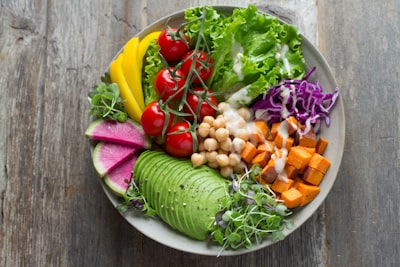
Avocados shine as the star of this dip! Lime juice, tomatoes, onion, and seasonings make guacamole a guilt-free addition to any snack or meal.

Since avocados fall under the superfood category, feel free to indulge. Packed full of good fats and nutrients, along with the fresh taste of lime and hint of spice, the dip is flavorful. It’s easy to make, too. Take it to work or use it for a party dish.

Guacamole is versatile, too. For example, add it as a topping on a quesadilla or even add it to a salad. Of course, the simplest way to enjoy is by dipping your favorite tortilla chip.

Originating with the Aztecs in Mexico, guacamole is an avocado-based sauce that has become popular in American cuisine as a dip, condiment, and salad ingredient. 

Using a mortar and pestle, mash ripe avocados and then mixing in sea salt.  Beyond the tomatoes, onion, garlic, and lemon juice, hot sauce, yogurt or other seasonings can be added.  If a celebration calls for spicier guacamole, add jalapenos, chilis, cumin, or red pepper. 

Want More????

HOW TO OBSERVE #NationalGuacamoleDay

Mix up your favorite recipe for guacamole. Go to your favorite restaurant and order some fresh guacamole. While there, give a shout out to the restaurants with the best guacamole around.  Be sure to invite friends. As we say around here, why #CelebrateEveryDay if you don’t do it with friends? Share your recipes and find the best combination. Use #NationalGuacamoleDay to share on social media.

HISPANIC HERITAGE MONTH

Beginning on September 15, and continuing through to October 15, we recognize National Hispanic Heritage Month. During the four weeks, celebrations honor the heritage and contributions made by members of the Hispanic community. President Lyndon Johnson first declared Hispanic Heritage Week in September of 1968. Years later, in 1988, U.S. Rep. Esteban Torres (D-California) introduced legislation to expand Hispanic Heritage Week into a full month. Festivities begin on September 15, marking the anniversary of independence for the Latin American countries Costa Rica, El Salvador, Guatemala, Honduras, and Nicaragua. With great fanfare, celebrations sweep across Latin America, Central American, and on into Mexico and Chili commemorating each country’s independence from week to week!

CONTRIBUTIONS

As of 2016, the Hispanic population has grown to nearly 57 million people in the United States. Amazingly, Hispanic people contribute to two-thirds of the residents, with that number increasing every day. Furthermore, an estimated 27 million Hispanics were eligible to vote that same year, proving people of Hispanic heritage are a thriving part of society. As the Hispanic population continues to grow in strides, more opportunity presents itself to embrace the rich culture and vast history they provide. From coast to coast, we celebrate Hispanic heritage every day in mainstream society. It’s not only reflecting our cultural differences; it’s adding a different perspective to our lives for us to enjoy.

Hispanic people across the country contribute to society in unprecedented ways. Historically, Alberto Gonzales is credited as being the first Hispanic U.S. Attorney General, while Mel Martinez is considered the first Cuban-American U.S. Senator. Currently, and politically, Ted Cruz and Marco Rubio, both members of the Hispanic community, are members of the U.S. Senate. Sonia Sotomayor is the first Hispanic to sit as a U.S. Supreme Court Justice. Undeniably, representation from the Hispanic community is found in schools, public office, medical, fashion, as well as every aspect of business.

In addition, pop culture contributions by the Hispanic community flourishes thanks to many talented artists, such as Salma Hayek, George Lopez, Carlos Santana, and Jennifer Lopez. Finally, we need to give credit to the countless tasty Hispanic recipes found across the nation. Hispanic food has increasingly become a part of mainstream Americana. We relish the flavor and spice deeply infused into the traditions. Dishes ranging from tacos and tamales to Cuban sandwiches, nachos, Tres leche cake, family taco night, tequila, and Mojitos, entice us to enjoy the Hispanic heritage, one bite at a time.

HISPANIC HERITAGE MONTH HISTORY

Originally, President Lyndon Johnson declared Hispanic Heritage Week in 1968. Through later legislation, submitted by U.S. Rep. Esteban Torres (D-California), the week was expanded to National Hispanic Heritage Month under the direction of President Ronald Reagan in 1988.

More to Explore…

HOW TO OBSERVE #HispanicHeritageMonth

Joining local celebrations during National Hispanic Heritage Month is a fantastic way to meet new people. Additionally, you can learn more about the contributions Hispanics have made in areas of politics, business, the arts, sports, fashion, and cuisine, to name a few. Embracing the history and traditions of another culture not only broadens your knowledge, but it also teaches appreciation of other people and their customs.

Use #HispanicHeritageMonth in social media correspondence.

NATIONAL CUBAN SANDWICH DAY

Cuban Sandwich

On August 23rd, celebrate a sandwich that originated in Cuba, but grew up in Florida. National Cuban Sandwich Day is a tribute to flavor found in a toasted pressed sandwich.

While the Cubano traditionally consists of ham, roast pork, swiss cheese, pickles and mustard on Cuban bread, restaurants and home cooks serve up different versions. While the sandwich alone may serve as a satisfying meal, some very flavorful sides complement this globe-trotting sandwich. Like any grilled sandwich, a creamy, dunkable soup makes the perfect complement. Consider making this delicious Smoky Roasted Corn Soup. Another favorite side dish is seasoned sweet potato fries.

The sandwich brings together flavor and history, too. By combining traditions from Cuban, German, and Italian immigrants, the sandwich offers a world tour of simple ingredients. If you’ve never had one, this is the day to try it.

NATIONAL CUBAN SANDWICH DAY HISTORY

Journalist Christopher Spata of the Tampa Bay Times set out to test the National Day food celebration waters in 2016. In his mission to make up a new food holiday, he managed to create a celebration that has gone around the world. According to his article, he chose August 23rd because the only other food holiday was National Sponge Cake Day, “and who cares about that?” (He’s obviously never had sponge cake or tried making one.” And while some articles call it a hoax, those who celebrate food days take them seriously.

Sandwich FAQ

Q. When is National Sandwich Day?
A. National Sandwich Day is November 3.

Q. How many sandwich holidays are on the calendar?
A. The short answer is there are 13 sandwich-specific days on the calendar. But, define sandwich. Most people (and dictionaries) define “sandwich” as a food comprised of two pieces of bread with a filling of meat, cheese, or other food items in between the bread. Hoagie, hamburger, and sloppy Joe easily fit that description. Grilled cheese sandwich has the word “sandwich” in its name. Those are no-brainers. But, what is a hot dog? Chili dog? What about the Oreo? Is it a sandwich or can you count desserts? Speaking of desserts, how about a s’more? Are graham crackers bread? That brings us to quesadillas. Tortillas are bread and some quesadillas use two tortillas. Is a quesadilla a sandwich? And then there are the open-face sandwiches. Is an egg benedict considered an open-face sandwich?

Explore More…

HOW TO OBSERVE #NationalCubanSandwichDay

Many restaurants offer specials on their Cuban Sandwich to celebrate the day. You’ll want to give the place that makes your favorite Cubano a shout-out, too! You can also make your own. Try a traditional recipe or change it up with your own distinctive style. You can also share the day with others while exploring new side dishes and recipes. Be sure to use #NationalCubanSandwichDay to share your celebrations on social media.

BUFFALO SOLDIERS DAY

Buffalo Soldiers Day on July 28th commemorates the formation of the first regular Army regiments comprising African American soldiers in 1866. 

Congress established the first peacetime all-black regiments in the regular U.S. Army after the end of the Civil War. The Buffalo Soldiers (one of many African-American regiments raised during the Civil War) were the first instituted.

Since they were frontier regiments, Buffalo Soldiers of the 9th and 10th Cavalries protected unsettled lands as pioneers moved westward. They also faced the hardships of the Wild West. During and after the Civil War, Army desertion rates remained high. However, among Buffalo Soldiers, low rates prevailed. They were also noted for their dedication and commitment during the Spanish-American War and other engagements during the late 1800s. 

During World War I, each unit received stateside assignments, with some exceptions. Yet, neither unit saw action during World War II. In 1944, the Army activated both regiments and transferred service members to other units, as integration in the military began. 

In honor of the first Buffalo Soldiers Day in 1992, General Colin Powell dedicated a monument to the Buffalo Soldier. It’s located at Fort Leavenworth, Kansas, where the 10th Calvary Buffalo Soldiers were based. The Buffalo Soldier Museum is located in Houston, Texas.

On September 6, 2005, the oldest living Buffalo Soldier died. Mark Matthews lived to be 111 years old. For his dedicated services, he was laid to rest at Arlington National Cemetery.

BUFFALO SOLDIERS DAY HISTORY

In 1992, the United States Congress passed a law designating July 28th as Buffalo Soldiers Day. Since then, commemorations honoring the Buffalo Soldiers have been held throughout the United States.  

Explore More…

HOW TO OBSERVE #BuffaloSoldiersDay

Visit Buffalo Soldier monuments across the country. Read about their history and sacrifices. Post on social media using #BuffaloSoldiersDay to encourage others to pay tribute to these heroes.

NATIONAL CARIBBEAN-AMERICAN HERITAGE MONTH

National Caribbean-American Heritage Month in June recognizes the contributions of the Caribbean-Americans to the diversity and broader landscape of American culture.

Caribbean American immigrants and residents of Caribbean U.S. territories are a vibrant part of the American melting pot. They have a long tradition of contributing to our communities and serving their country. From the first Secretary of Treasury, Alexander Hamilton to civil rights activist W.E.B. Du Bois and Jennifer Carroll, Lieutenant Governor of Florida, Caribbean American’s step up to challenges across generations.

The month is an opportunity to celebrate the heritage, history, and cultural diversity and a time to explore the traditions Caribbean-Americans carry with them.

HISTORY

The official campaign for a National Caribbean American Heritage Month began in 2004 when a legislative bill was tabled in Congress by Congresswoman Barbara Lee. Language was provided by ICS Founder and President Dr. Claire Nelson. The Bill was reintroduced and passed the House in June 2005 and the Senate in February 2006. A Proclamation making the resolution official was signed by President George W. Bush on June 5, 2006.

In 2006, actress and singer Sheryl Lee Ralph and basketball great Rick Fox were named official spokespersons for National Caribbean American Heritage Month. Learn more at www.caribbeanamericanheritage.org.

Each year, ICS works with our partners at a number of organizations to present a parade of events for varied palates.  Learn more about this year’s events at www.caribbeanamericanheritage.org.

Learn to celebrate more heritages.  After all we often have much more in common that unites us.

HOW TO OBSERVE

Share your experiences and knowledge during National Caribbean-American Heritage month. Learn the history of immigration from the Caribbean by visiting museums and exhibits. Visit with friends and family members and learn about their experiences and culture. Use #CaribbeanAmericanHeritageMonth to share on social media.