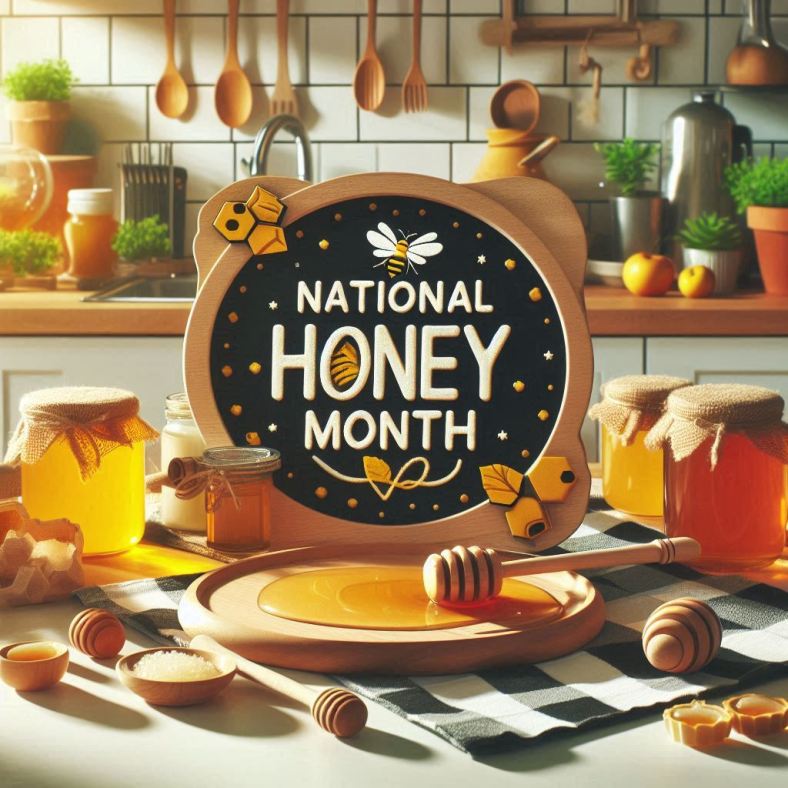
NATIONAL HONEY MONTH

Honey is a sweet and viscous fluid produced by honey bees, and derived from the nectar of flowers. According to the United States National Honey Board and various international food regulations, “honey stipulates a pure product that does not allow for the addition of any other substance…this includes, but is not limited to, water or other sweeteners”.

Honey is Not All the Same.
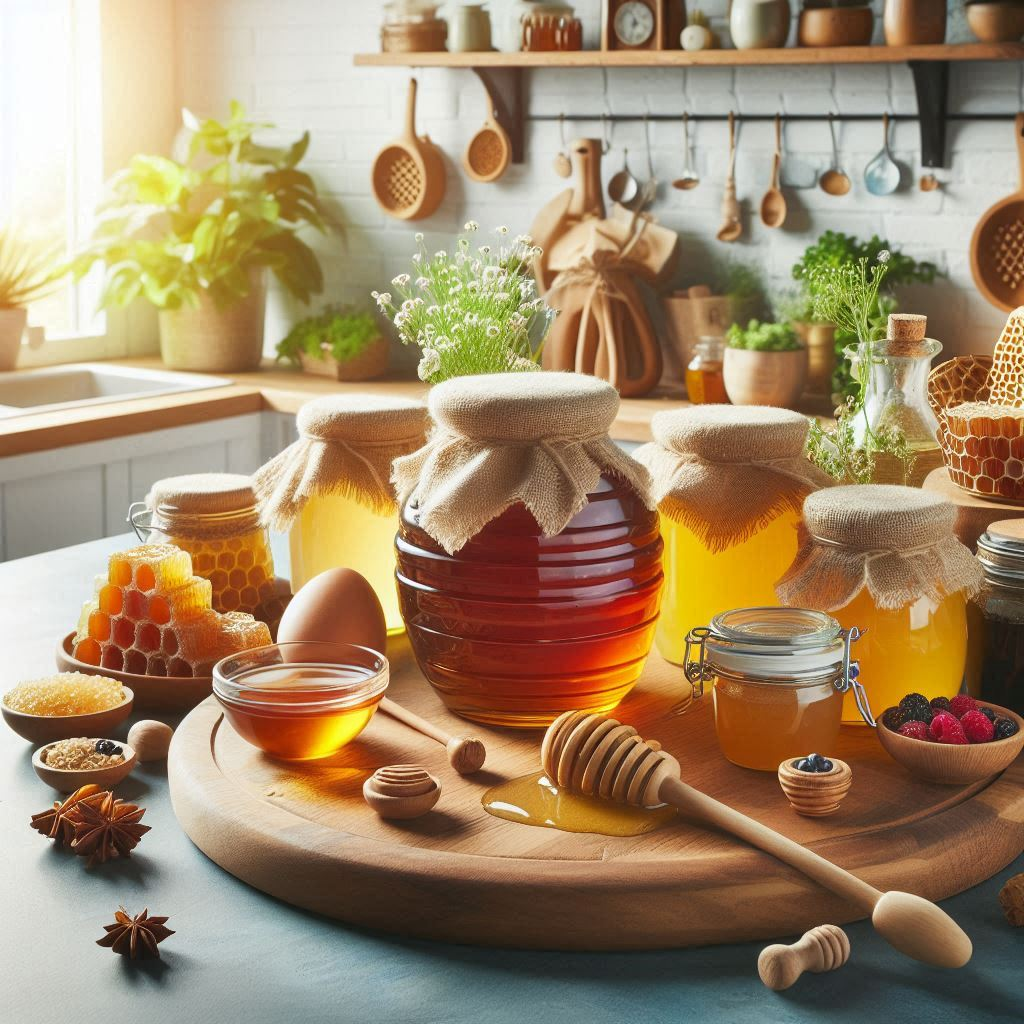
Honey is available in many varieties! Did you realize that honey is available in many different varieties? When bees visit mostly one kind of flower as they gather nectar, the honey they produce has a unique taste, aroma and color from that particular flower. Other honeys are delicious blends of floral sources (look for Mixed Flower, Polyfloral, Wildflower).  The Honey Locator is a website you can use to find suppliers of these many varieties of honey. 

September is significant for honey producers as it is the month that marks the end of the honey collection season for many beekeepers in the United States.

Honey and its use
The main uses of honey are in cooking, baking, as a spread on breads, and as an addition to various beverages such as tea and as a sweetener in commercial beverages. Because honey is hygroscopic (drawing moisture from the air), a small quantity of honey added to a pastry recipe will retard staling.

Medicinal uses and health effects of honey
For at least 2700 years, honey has been used to treat a variety of ailments through topical application, but only recently have the antiseptic and antibacterial properties of honey been chemically explained. As an antimicrobial agent honey may have the potential for treating a variety of ailments.

  • Topical honey has been used successfully in a comprehensive treatment of diabetic ulcers when the patient cannot use other topical antibiotics. Some studies suggest that the topical use of honey may reduce odors, swelling, and scarring when used to treat wounds.
  • Raw honey also contains enzymes that help in digestion, several vitamins and antioxidants.
  • Honey may also prevent the dressing from sticking to the healing wounds.
  • Honey has been shown to be an effective treatment for conjunctivitis in rats.
  • Honey (especially when combined with lemon) is often taken orally by pharyngitis and laryngitis sufferers, in order to soothe them.
  • Honey has been a part of many folk cures, it is common and cheap (compared to pharmaceuticals), and cannot be patented.

A Honey for All Skins
Skin is the body’s largest organ and its most exposed. Throughout life, the skin comes into contact with more damaging conditions and environments than any other part of the body. Pamper it with one of the world’s oldest skin care secrets, honey.  read more http://www.honey.com/consumers/sb/skins.asp

History
The awareness month was initiated by The National Honey Board, a United States Department of Agriculture (USDA) founded and overseen organization. (a US government established, USDA-overseen, organization) in 1989.

Biblical Period
The Old Testament contains many references to honey as a symbol for all that is pleasant and desirable. For example, the book of Exodus famously describes the Promised Land as a ‘land flowing with milk and honey’ (33:3). There, however, the Hebrew devash refers to the sweet syrup produced from the juice of the date. In contrast, bees’ honey is referred to explicitly in The Book of Judges when Samson found a swarm of bees and honey in the carcass of a lion (14:8). Matthew 3:4 John the Baptist lived for a long period of time in the wilderness on a diet consisting of locusts and wild honey. The word “honey” appears 61 times in the King James Version of the Bible.
http://en.wikipedia.org/wiki/Honeyy

HOW TO OBSERVE

Add some honey to your diet and use #NationalHoneyMonth to post on social media.

WORLD HONEY BEE DAY

World Honey Bee Day is the third Saturday in August and brings a buzzing celebration for beekeepers, honey lovers, and all blooming things.

The day recognizes both the honey bee and the beekeepers who tend the hives. It also encourages everyone to enjoy and buy locally grown honey.

Another important part of the day includes learning about honey bees and providing them with a supportive environment. When we plant wildflowers, orchards, and other flowering plants, we support pollinators such as honey bees. They depend on the nectar of a variety of plants for their survival. Conversely, we depend on honeybees for our survival, too! Without their pollinating abilities, many nutritious plants wouldn’t reproduce.

Besides, their delicious honey is an added bonus. We enjoy it in our baking, teas, and confections.

Honey bees do sting, but only if they perceive a threat – damage to their hive or being swatted at. Since they seek sweet nectar, sugary drinks and sweets will attract honey bees when flowers are not blooming yet.  So, keep your beverages covered. If a honey bee comes close, either hold still or move slowly away. The honey bee will fly along to the next sweet thing as long as it doesn’t feel threatened.

WORLD HONEY BEE DAY HISTORY

World Honey Bee Day began as National Honey Bee Day in 2009 with a proclamation issued by the Secretary of Agriculture, Thomas J. Vilsek. The day grew rapidly bringing awareness to the benefits and environmental needs of honey bees.

Honey Bee FAQ

  1. What does a beekeeper do?Also known as an Apiarist, a beekeeper is responsible for maintaining hives. This may include inspecting for disease and other issues, replace the queen bee if needed, provide forage or bee food, offer pollination services, and harvest honey.
  2. How many honey bees live in one hive?One honey bee colony can have a population of 20,000 to 60,000 bees.
  3. How much honey does one hive produce?It all depends on the availability of nectar and the health of the hive. Season of drought, rain, or disease will impact a hive. When conditions are ideal a healthy hive can produce up to 200 pounds of honey per year.
  4. How many queens does a honey bee colony have?One. If the queen dies, the hive or the beekeeper will replace her. The hive also consists of male bees called drones and female worker bees.

6 WAYS TO CELEBRATE WORLD HONEY BEE DAY

  1. Collect and spread local wildflower seeds to promote honey bee pollination.
  2. Flavors of honey vary depending on the variety of flowers and nectar available to the bees.
  3. Clover, alfalfa, lavender, orange, and chestnut are just a few to choose from.
  4. Replace your usual sweetener with honey for the day. Taste the difference!
  5. Give the gift of honey to a friend, neighbor, co-worker or family member.
  6. Share your sweet honey stories on social media tagging #WorldHoneyBeeDay.

NATIONAL POLLINATORS MONTH

National Pollinators Month in June encourages the planting of pollinator gardens of native, non-invasive pollen and nectar-producing plants. When these gardens bloom, they attract bees, birds, bats, and other natural pollinators.

These pollinators make the difference between valuable fruits and vegetables on our tables. While we’re planting native flowers and trees, we’re also providing for our future. Pollinators such as the monarch butterfly and the honey bee have been in decline. All the reasons have not been identified. However, increasing the available habitat does help!

HISTORY

National Pollinators Month is an initiative of the National Wildlife Federation. With pollinators on the decline, their initiative is designed to increase native pollen and nectar-producing through the Million Garden Challenge.  

HOW TO OBSERVE

Find out which are the best plants for your zone. Visit www.nwf.org to find out more. Use #NationalPollinatorsMonth or #BeeCounted to share on social media.