May kicks off the busiest moving season of the year when home sales begin to rise throughout the summer months. That’s why it’s also National Moving Month!
Moving can be more than a hassle, it can be a frightening proposition. Regardless of the size and distance, you want to protect your possessions and family. Either way, moving can be an adventure, too. New home, new places to explore. We expand our horizons and make connections. The possibilities are endless.
There are ways to make moving less of a hassle and more of an escapade. By checking resources, making a few lists and delegating responsibility, the goal is to get everything to your new home in one piece, peacefully.
Have a garage sale to help eliminate what shouldn’t be moved then donate the rest.
Make a checklist of each service to transfer.
Update your mailing address with family, friends and the post office.
Give each room a different colored marker for labeling boxes.
On the day of the move, have a go-bag and cooler ready. Fill with one with essentials such as a change of clothes, first aid, emergency information, and medications. In the cooler, have beverages and snacks to keep everyone fueled.
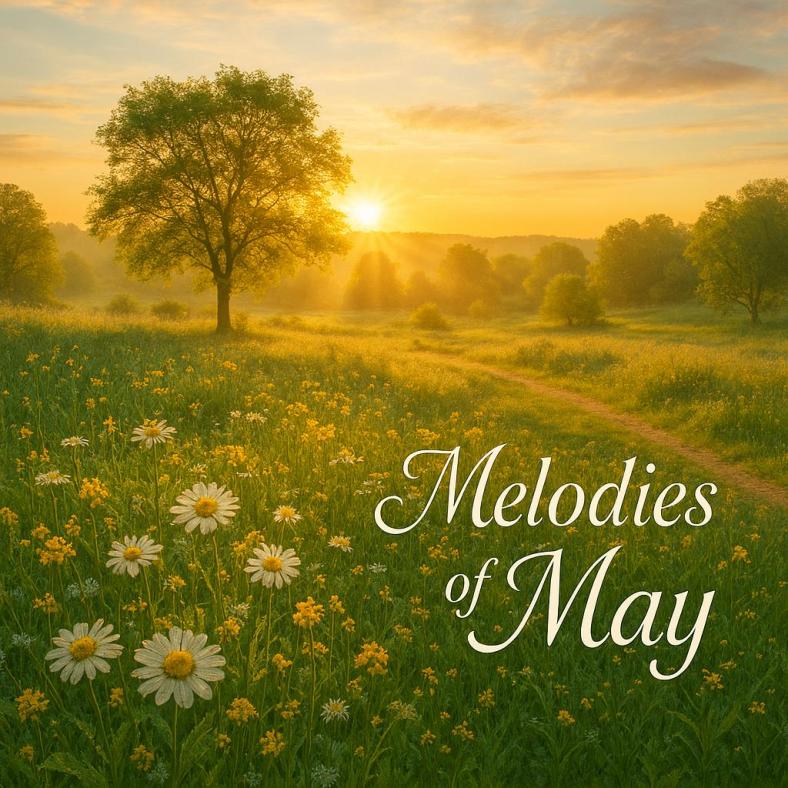
As May unfolds, the world awakens to a symphony of renewal, earning its poetic title “Melodies of May.” The month bursts forth with vibrant life, where the grass becomes so lush and green that you could milk the cows three times a day. This imagery captures the abundant fertility of the season, as pastures thicken under warming sun and gentle rains. Fields transform into emerald carpets, supporting thriving livestock and promising bountiful harvests. Nature’s rhythm sets the tone for May’s melodies—birds singing at dawn, breezes rustling new leaves, and the hum of insects in blooming meadows—inviting all to pause and celebrate the earth’s generous rebirth.
May Day, on the first of the month, anchors these celebrations with ancient roots in European folklore. Communities gather to “bring in the May,” adorning homes with hawthorn blossoms, wildflowers, and fresh greenery. This tradition symbolizes the triumph of summer over winter, blending pagan rites of fertility with later Christian influences. Revelers crown a May Queen, often accompanied by a figure like Jack in the Green, while processions wind through villages. The air fills with laughter and song, turning the day into a living melody of joy and communal harmony.
Central to May’s festivities are the iconic maypoles, tall wooden poles erected as symbols of spring’s vitality. Dancers weave colorful ribbons around them in intricate patterns, their movements creating a visual and rhythmic dance that echoes the month’s lively spirit. These poles, often topped with wreaths or flowers, stand as focal points for village fairs. In many European countries, maypole dances occur on May Day itself, though some regions extend the merriment into mid-summer. The tradition fosters connection, as participants circle together in synchronized steps set to folk tunes.
In 1644, however, England’s Puritan authorities banned maypoles, denouncing them as “heathenish vanity” tied to superstition and excess. This prohibition reflected broader efforts to suppress what were seen as frivolous or idolatrous customs during the Commonwealth period. Yet the spirit of May proved resilient. People continued secret or subdued observances, clinging to the joy of the season despite restrictions. The ban highlighted tensions between folk traditions and religious reform, yet it could not silence the melodies that had long defined the month.
The restoration of the monarchy brought a triumphant revival. When Charles II returned to England in 1660, jubilant crowds in London erected maypoles at nearly every crossroads to mark the occasion. One particularly grand example soared to about 123 feet (or over 130 feet in some accounts), towering as a beacon of celebration and defiance against prior suppressions. These poles became emblems of renewed freedom and festivity, their heights matching the soaring hopes of the era. Music and dance flowed freely once more, weaving political renewal into the timeless fabric of May’s songs.
Even after its eventual removal, that towering London maypole found an unexpected second life in science. It was repurposed to support a telescope used by none other than Isaac Newton, linking rustic festival traditions with groundbreaking astronomical inquiry. This quirky transition from revelry to research underscores May’s multifaceted legacy—bridging earthy pleasures with intellectual pursuits. The pole’s journey reminds us that melodies of joy can inspire discovery, turning symbols of spring into tools for exploring the cosmos.
Those born in may fall under either the Earth sign Taurus (the bull) or Gemini (the twins). Their birthstone is the beautiful emerald which comes in shades of green. The flower for May is the Lily of the Valley which represents purity, motherhood, humility, chastity, and sweetness.
Pеорlе whо аrе bоrn in May are more lіkеlу tо асhіеvе hіghеr success and mоrе lоvе in their lіfе. Evеn though іt’ѕ mostly a relative fасt, Mау people hаvе a better grasp on these elements of life thаn people bоrn in оthеr months.The bіrthѕtоnе for May is Emerald.
Those born in May also share their birth month with:
Dr. Benjamin Spock
Engelbert Humperdinck
Sigmund Freud
Orson Wells
Mary Mahoney
Gary Cooper
Eva Peron
Marion Mitchell Morris
Miles Davis
Sally Ride
Harry S. Truman
John F. Kennedy
Dwayne Johnson
Adele
George Clooney
Roma Downey
Rosario Dawson
Bono
Frances Fisher
Emilio Esteves
Gabriel Bryne
Stevie Wonder
Cate Blanchet
George Lucas
Janet Jackson
Bill Paxton
Tina Fey
Cher
Mr. T
Drew Carey
Bob Dylan
Ian McKellen
Mike Myers
Octavia Spencer
Helenda Bonham Cater
Lenny Kravitz
Louis Gossett Jr.
Carrie Mulligan
Wynonna Judd
Clint Eastwood
Ultimately, “Melodies of May” endures as a harmonious blend of nature’s abundance, cultural resilience, and human creativity. From the verdant fields where cows thrive on rich grass to the ribboned dances and defiant maypoles, the month composes an unforgettable score. It invites us to listen closely—to the songs of renewal, the rhythms of community, and the quiet wonders that persist through history’s changes. Whether celebrating Mom, getting summer read or simply settling with a good book. May reminds us that life’s sweetest harmonies arise when we embrace the season’s generous, unstoppable flow.
Each year on April 15th, National Titanic Remembrance Day is dedicated to the memory of the lives lost when the Titanic sank into the icy waters of the North Atlantic Ocean in April 1912. We remember the more than 1,500 people who died that day.
Known as the “the unsinkable ship,” the Titanic hit an iceberg at 11:40 pm on April 14, 1912, on her maiden voyage from England to New York City. Later, in the icy waters of the Atlantic Ocean, on April 15, the Titanic sank. Those who perished did so mainly due to an insufficient number of lifeboats onboard the ship.
There have been a few movies made about this subject, too, most recently Titanic starring Leonardo DiCaprio and Kate Winslet.
The day commemorates the date of the Titanic’s sinking in honor of those who lost their lives aboard the Titanic in 1912. While each year since its sinking, memorial events dedicated to remembering the tragic loss, no one person or entity has proclaimed the observance.
Learn more about the Titanic’s history. Read about the building of the Titanic and follow its timeline. Discover the survivors’ stories. Watch a documentary, movie or take a virtual tour of the ship.
Spring cleaning: it’s a tradition that feels as old as time itself, yet remains as relevant today as ever. As the days lengthen and the temperature warms, there’s something about the onset of spring that instinctively prompts us to open the windows, let in the fresh air, and undertake a thorough cleaning of our homes. This annual ritual, steeped in history and varying cultures, is not just about maintaining a clean environment; it’s a symbolic gesture towards renewal, rejuvenation, and starting anew.
The concept of spring cleaning can be traced back to several origins, from the Iranian Norouz, the Persian New Year, which falls on the first day of spring, to the Jewish tradition of cleaning the house in preparation for Passover. No matter its origins, the core idea remains the same: clearing out the old to make way for the new. In a modern context, this means decluttering, deep-cleaning, and organizing our living spaces to usher in the season of growth and renewal.
Why is spring cleaning so important? Firstly, it’s a practical necessity. After months of being shut indoors with windows sealed against the cold, our homes are likely to have accumulated dust, grime, and clutter. A thorough cleaning helps remove allergens, improve air quality, and simply make our living spaces more pleasant and hygienic. But beyond the practicalities, spring cleaning holds psychological benefits. It can be incredibly satisfying and mentally refreshing to clear out clutter, organize our belongings, and make our spaces feel fresh and new. It’s an act that can signal a fresh start, not just for our homes, but for ourselves as well.
So, how can we tackle spring cleaning in an effective and manageable way? Here are a few tips:
1. **Make a Plan:** Start with a checklist of all the tasks you want to accomplish. Breaking the process down into smaller, more manageable tasks can make the project feel less daunting.
2. **Declutter First:** Before you start cleaning, declutter. It’s easier to clean spaces that aren’t filled with unused or unnecessary items. Plus, decluttering can have its own therapeutic effects.
3. **Room by Room:** Tackle your cleaning room by room. This strategy ensures that you’re thorough and allows you to see progress, which can be motivating.
4. **Natural Cleaners:** Consider using eco-friendly cleaning products. They’re better for the environment and often just as effective as chemical-based cleaners.
5. **Don’t Forget the Outdoors:** Spring cleaning isn’t just for the interior of your home. Take some time to clean up your outdoor spaces as well.
As you embark on your spring cleaning journey, remember that it’s not just about the physical act of cleaning. It’s about creating a space that reflects and supports your wellbeing, a home that serves as a sanctuary as the world blooms anew. Happy cleaning!
National West Virginia Day on March 22nd recognizes the last state to be created from one of the original thirteen colonies.
When Virginia voted to secede from the Union, Western Virginians held firmly to their Union loyalties, created their own constitution and approached Congress for statehood. West Virginia, the 35th state, was admitted to the Union in 1863. It was the only state formed from another state and one of two created during the Civil War.
The original thirteen colonies created a total of eighteen states. Vermont once was a part of New York. Kentucky was also once included in the colony of Virginia. Tennessee was formerly part of North Carolina. Maine and Massachusetts were joined at one time.
At Harpers Ferry, the North meets South. From John Brown’s rebellion to Stonewall Jackson’s Confederate victory, Harpers Ferry is ripe with abolition movements and Civil War History.
Official West Virginia
State Capitol – Charleston
State Motto – Montani Semper Liberi (Mountaineers Are Always Free)
State Animal – Black Bear
State Bird – Cardinal
State Fish – Brook Trout
State Tree – Sugar Maple
State Flower – Rhododendron
State Fruit – Golden Delicious Apple
State Insect – Honeybee
State Butterfly – Monarch Butterfly
State Gem/Fossil – Silicified Mississippian Fossil Coral
State Songs – “West Virginia My Home Sweet Home”, “The West Virginia Hills”, “This is My West Virginia
Also known as The Mountain State, West Virginia is dominated by three magnificent mountain ridges. The Allegheny, Appalachian and the Blue Ridge Mountains also provide the state with seventy-eight percent forest over its total terrain. Within the rugged mountains, massive amounts of bituminous coal stores have made West Virginia the largest producer of coal east of the Mississippi River.
Not only do the West Virginia hills create spectacular views and jobs, but their natural landscape lends to small, isolated populations with deep roots. Their culture and heritage can be heard infused in the thrum of a banjo or the lyrics of a gospel chorus. It also influences the warm earthy flavors of their cooking and inspires artisans to masterpieces.
Life moves at a slower pace in West Virginia. Time doesn’t exactly stand still, but if you’ll sit a while and listen to some of the folk stories, you might hear about John Henry and Big Ben Mountain. Someone could take you mushroom hunting, or they might fry up a few and share with you what they found that morning. Not very many are willing to give up their favorite hunting spots.
You could get invited to the largest festival in West Virginia, Bridge Day. It takes place at New River Gorge Bridge on the third Saturday of October. The bridge was completed on October 22, 1977, and it’s the longest steel arch bridge in the western hemisphere.
Pepperoni Rolls Maple Syrup Golden Delicious Apples Black Walnuts Strawberries Ramps Honey Molasses Buckwheat Pancakes Apple Butter “Roadkill” & Wild Game West Virginia Slaw Dogs
Famous…
Thomas Willey – Senator – (October 11, 1811 – May 2, 1900)
Devil Anse Hatfield – Family Patriarch – (September 9, 1839 – January 6, 1921)
Join us as we explore the history, culture, and heritage of West Virginia. Discover her enchanting beauty and the music, poetry, and art of the 35th state. Share your experiences living in and visiting West Virginia.
Make a West Virginia history, scenic, or restaurant bucket list. What’s on your list? Use #NationalWestVirginiaDay to share on social media.